Shipping is part of the price
Customers pay for the product and the delivery together. How shipping costs, free-shipping limits and delivery times change which shop is actually cheapest.
Corprice4 min read
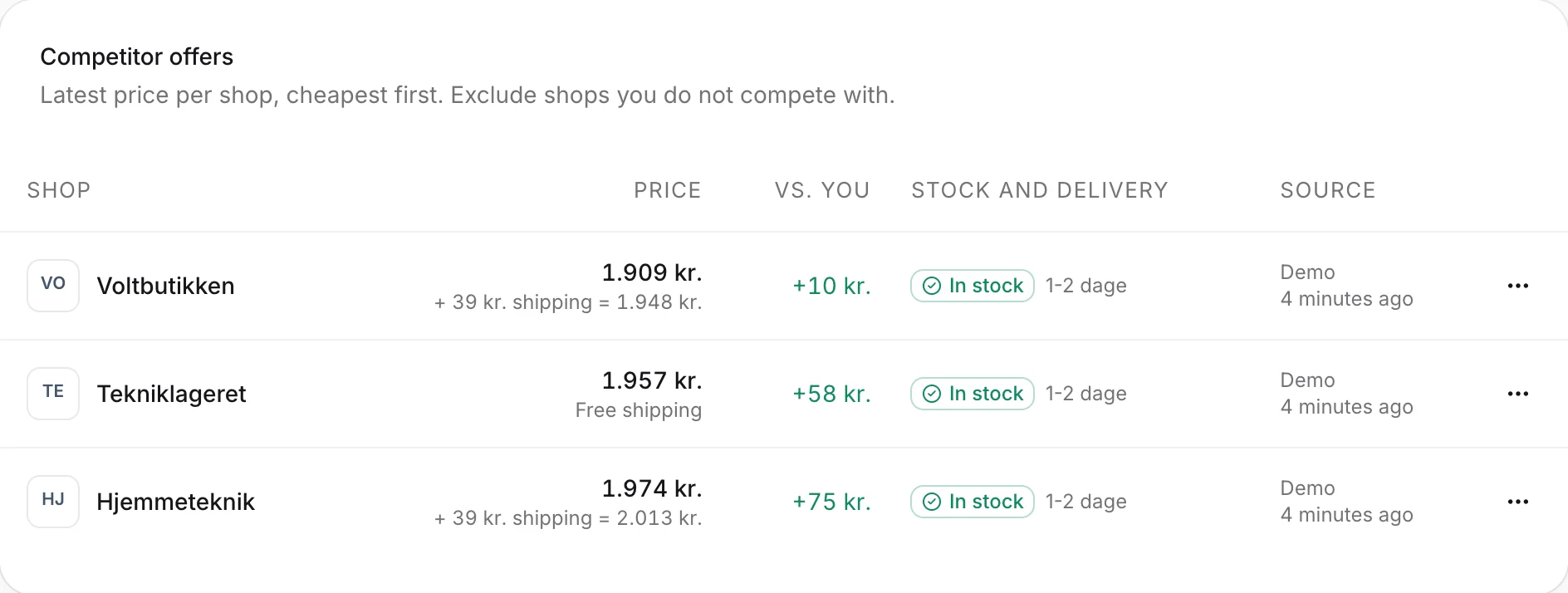
Most price comparisons look at the product price. Customers do not pay the product price. They pay the product, the shipping and sometimes a fee for the payment method, and they compare what they will pay in total at checkout. A shop that looks DKK 20 cheaper on the product page can be DKK 40 dearer by the time the customer gets there.
The same total, two different gaps
Example. The prices below are made up to show the effect.
| Product | Shipping | Total | |
|---|---|---|---|
| Your shop | DKK 449 | DKK 39 | DKK 488 |
| Competitor | DKK 429 | DKK 59 | DKK 488 |
On the product price, the competitor is DKK 20 cheaper, about 4.5 %. A rule that matches the cheapest competitor would lower your price by DKK 20. On the total, you are level. The DKK 20 you would give away buys nothing.
Free-shipping limits move the comparison
Free shipping above a limit makes the picture depend on the basket.
Example. You ship for free above DKK 400. The competitor ships for free above DKK 500 and charges DKK 59 below that.
| Product | Shipping | Total | |
|---|---|---|---|
| Your shop | DKK 449 | Free | DKK 449 |
| Competitor | DKK 429 | DKK 59 | DKK 488 |
Now you are DKK 39 cheaper in total, although your product price is higher.
If the customer adds a DKK 99 pack of filters, sold at the same price in both shops, the competitor’s basket reaches DKK 528 and their shipping becomes free too. Yours is DKK 548. The competitor is DKK 20 cheaper again.
There is no single “right” comparison here. But there are products where the limit almost always decides it: products priced just below a competitor’s free-shipping limit, and cheap products that are usually bought alone.
Which shipping price?
Shops often have several delivery options: a parcel shop, home delivery, express, click and collect. The prices can differ by DKK 30 or more. For a comparison, pick one option and use it on both sides, for example the cheapest delivery to a parcel shop.
The shipping shown on a product page is not always what the customer pays. Some shops show “from DKK 39” and charge more for heavy or bulky items. Some only show the price in the basket. The most reliable number is the one you get by adding the product to the basket for a real postcode.
Delivery time and stock belong to the offer too
A lower price with delivery in 5 to 7 days or on backorder is a different offer from one that arrives tomorrow. Some customers will wait for a lower price. Many will not, especially for products they need now or gifts with a date.
When you compare yourself with a competitor, look at three things next to the price:
- Stock. Sold out or on backorder means they are not taking the sale today.
- Delivery time. Days, not just “in stock”.
- Return terms. A longer return period counts for some products, such as clothing and shoes.
What it means for your price decisions
Look at the gap with shipping before you lower a price. If the competitor is cheaper on the product but not in total, a price cut costs margin without making you cheaper where it counts.
Set your own free-shipping limit with your product prices in mind. If many of your best sellers are priced just below the limit, a small change to the limit can matter more than a change to the prices.
Watch competitors’ shipping terms, not only their prices. A competitor lowering their free-shipping limit from DKK 500 to DKK 299 is a price change on every product in that range, even though no product price has moved.
Shipping in the index, alerts and rules
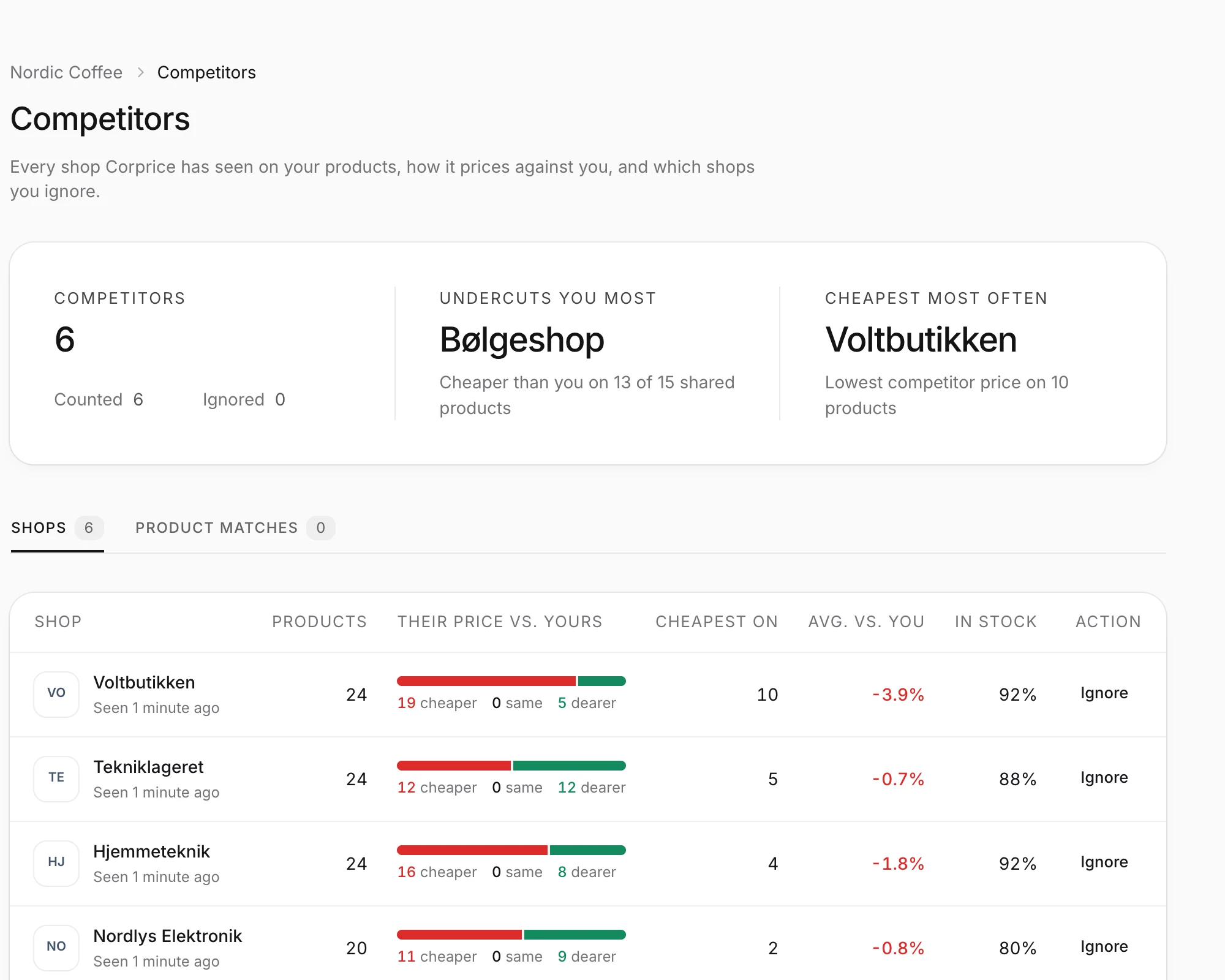
On every check, Corprice reads the competitor’s price, before-price, stock, delivery time and shipping cost. Where a shop allows it, shipping is measured by adding the product to the competitor’s basket for your postcode. Otherwise it is read from the page.
Corprice keeps two price indexes: one without shipping and one where shipping is added on both sides. If the two differ, the one with shipping is closer to what the customer pays. Free-shipping limits, delivery times, return periods and other terms are read every week from each shop’s own pages, and an alert can tell you when a competitor’s shipping or return terms change.
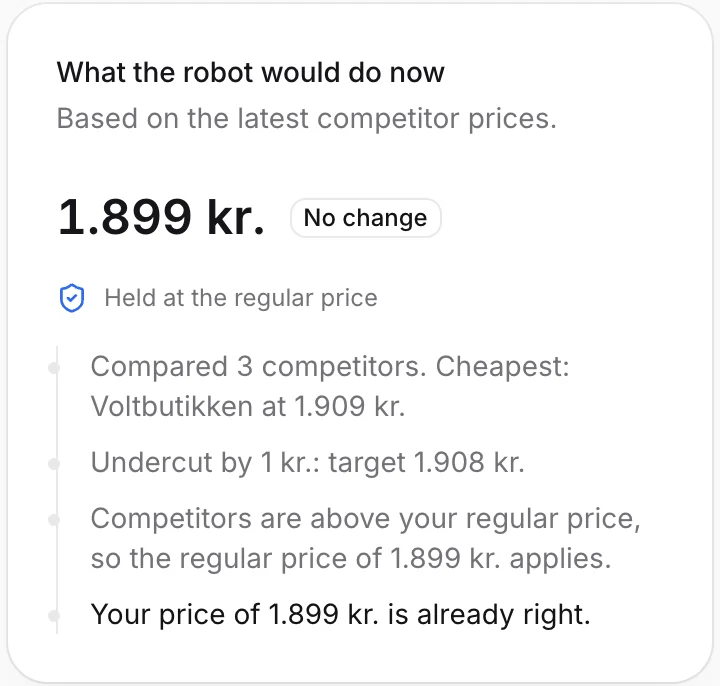
Repricing rules compare product prices. They do not add shipping. If a competitor’s low price is offset by high shipping, check the index with shipping before you let a rule follow them. A rule can leave out named shops, sold-out offers, backorders and offers with a delivery time above your limit.
Read how to read a price index for more on the two indexes, or see what is read on every check on the price monitoring page.